
Otti Attributes Abia’s BudgIT Rise To Accountability, Reforms
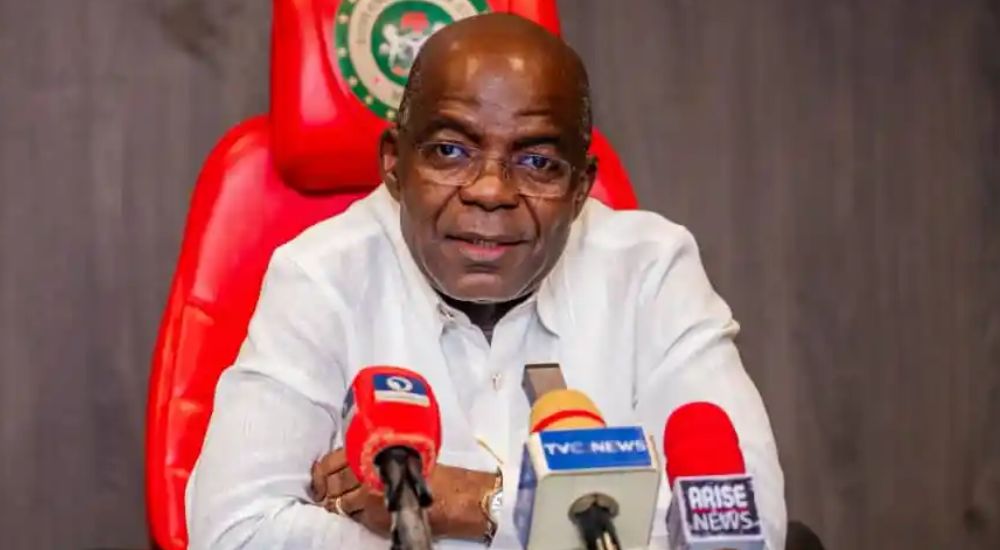
Abia State Governor Dr. Alex Otti, has reaffirmed that transparency in governance was “non-negotiable” and emphasized that his administration had consistently enforced accountability across all levels of government.
He maintained that transparency, accountability, and prudent management of public resources, declaring that ethical governance remains the bedrock of his leadership in Abia State.
The Governor made this known on Tuesday, May 12, 2026, at his office in Nvosi, Isiala Ngwa South Local Government Area, while receiving a delegation from the BudgIT Foundation led by its Global Director, Oluseun Onigbinde.
The visit followed the release of BudgIT’s 2025 State of States Report, which ranked Abia State as the fourth best-performing state in the country, marking a significant leap from its previous 17th position within just two years of the Otti administration.
“The issue about transparency is non-negotiable. And we have had cause to part with people because of the issue of transparency. Because that’s the foundation.
“And I’ve always said that people watch you. They listen to you. But most times they do what you do, not what you say.
Advertisement
“If you lead by example, even without saying anything, people will key in. And when they are not doing the right thing, they will be panicking on their own, even before they are found.
“So it’s not even a matter to discuss. It is taken for granted that everybody working here has to be transparent”, Governor Otti said.
The Governor explained that beyond fiscal sustainability and internally generated revenue, his administration remained focused on improving the living conditions of Abians through strategic investments in critical sectors such as education, healthcare, and infrastructure.
He revealed that upon assumption of office in 2023, the administration inherited a state with severely decayed public infrastructure, dysfunctional healthcare facilities, poor environmental conditions, and declining school enrolment across public schools.
Governor Otti disclosed that his government introduced free and compulsory basic education after discovering that financial barriers had prevented many children from accessing education.
Advertisement
According to him, the policy triggered a dramatic increase in school enrolment, compelling the government to commence large-scale recruitment of teachers to address manpower shortages in public schools across the state.
The Governor further highlighted major reforms in the healthcare sector, stating that the administration met 948 dysfunctional primary healthcare centres on ground but had since commenced comprehensive efforts to rebuild the health system. He also noted ongoing efforts that restored accreditation for the Abia State University Teaching Hospital.
Governor Otti stated that rather than aggressively pursuing taxation during the early phase of his administration, the government deliberately concentrated on rebuilding public infrastructure and restoring the confidence of citizens in governance.
He also welcomed the proposed partnership with BudgIT Foundation, noting that the collaboration would strengthen fiscal sustainability, transparency, and accountability within the state.
Earlier in his remarks, BudgIT Global Director, Oluseun Onigbinde, commended the developmental strides recorded under the Otti administration and expressed the organisation’s readiness to establish a strategic partnership with the Abia State Government.
According to him, the proposed collaboration would focus on fiscal sustainability, transparency, accountability, and investments in key social sectors such as healthcare and education.
Advertisement
“We are impressed primarily with your progress and we want to see Abia continue to lead on this. Abia State is number four. It used to be number 17.
“Abia moved from 17 to fourth within a period of two years and that’s a very, very competitive index”, he said.
Onigbinde further explained that BudgIT’s State of States ranking had become an important benchmark frequently referenced by development partners, financial institutions, rating agencies, and international bodies including the World Bank in evaluating state performance across Nigeria.
He also stressed the importance of sustained investment in healthcare, insisting that long-term development could only be achieved through deliberate prioritisation of human capital development.
Also speaking, Vahyala Kwaga, the Nigeria Country Director of BudgIT, stated that Abia emerged as one of the best-performing states across several sub-indexes assessed in the report.
“Abia came fourth overall and particularly, if you look at the sub-indexes that make up the index itself, Abia was in top four for Index A, A1, B, and D.
“I think that is a testament to how well the state is being run”, Kwaga said.
Kwaga added that Abia had consistently maintained a strong reputation in fiscal transparency reporting and described the state government as open to constructive engagement and reform-driven partnerships.
He noted that BudgIT was eager to deepen collaboration with the state government in order to strengthen governance systems, improve public sector reporting standards, and support ongoing reforms in healthcare and other critical social sectors.